ISO Containers

ISO Container Types and Their Specifications

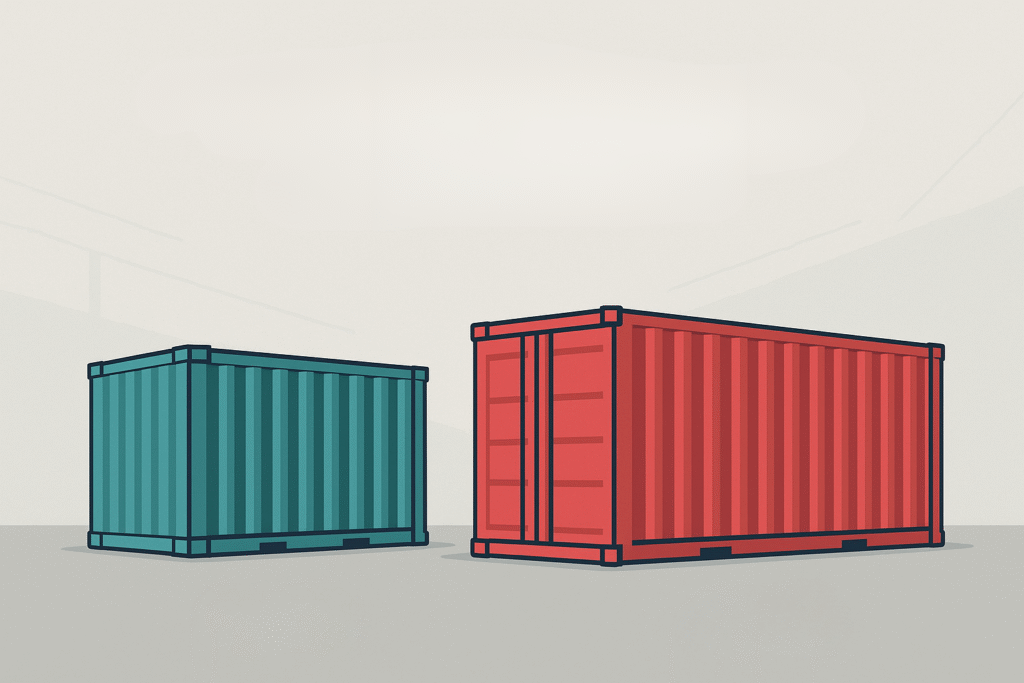
Shipping containers are standardized units used worldwide for transporting various types of cargo. The most commonly used sizes are 20 feet and 40 feet, known internationally as TEU (Twenty-Foot Equivalent Unit) and FEU (Forty-Foot Equivalent Unit). Beyond size, containers differ by construction and purpose — depending on the nature of the goods they are built to carry. Below is an overview of the main container types used in logistics and freight transport.

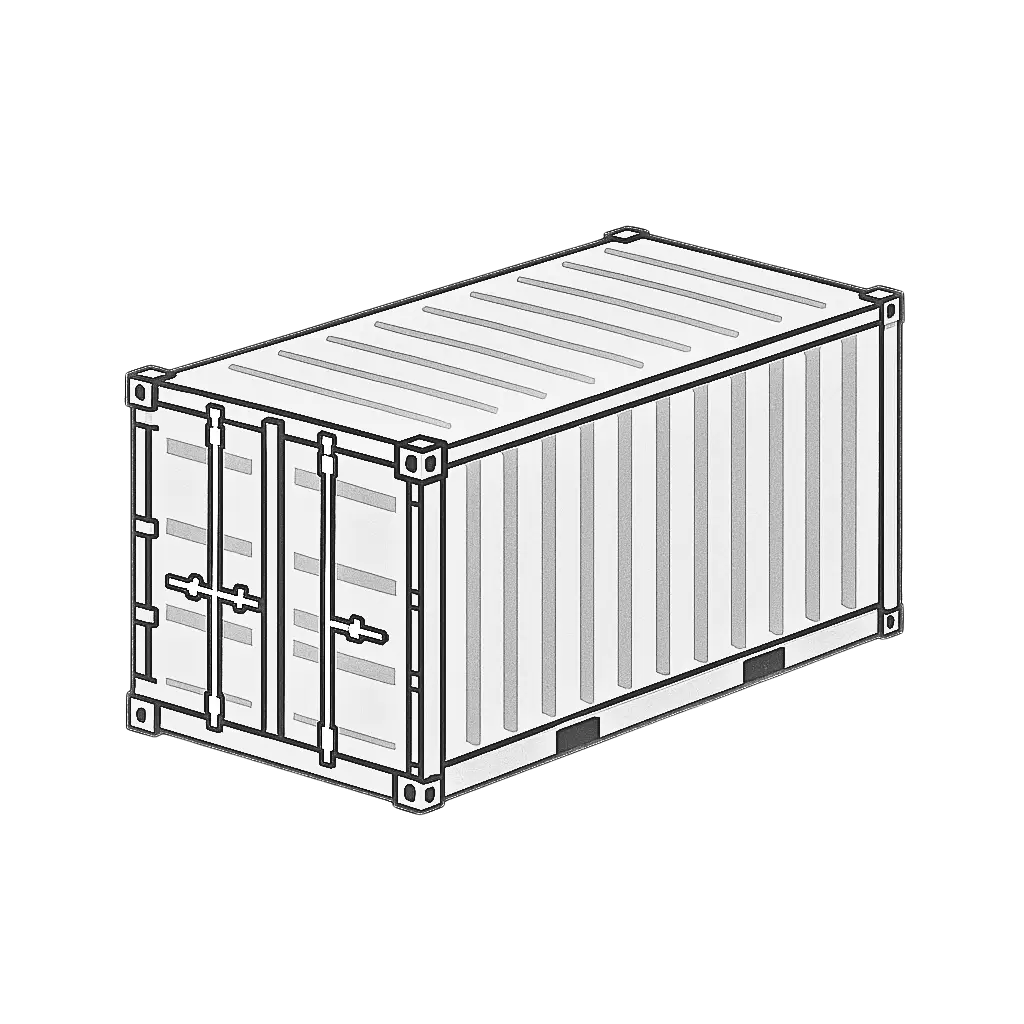
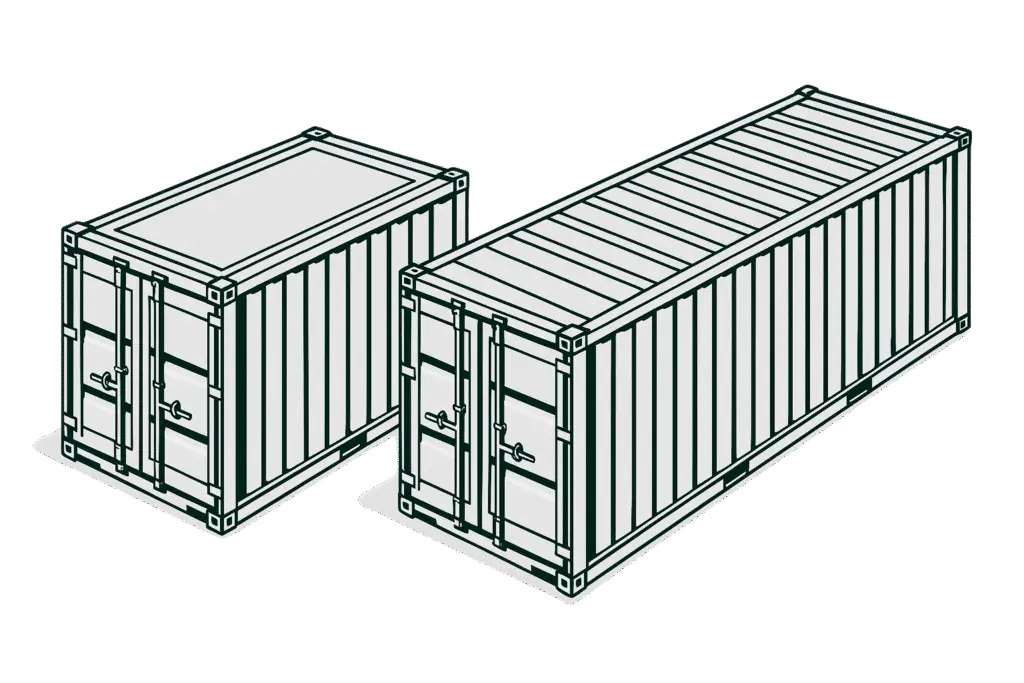
20’ Dry Cargo Container (20DC)

Use: Standard general-purpose container suitable for most dry goods.

  • Internal size: 5.9 × 2.35 × 2.39 m
  • Volume: 33.2 m³
  • Max load: 28.3 t
  • Tare weight: 2,220 kg

High version: Slightly higher internal dimensions (2.6 m height), providing:

  • Volume: 37.5 m³
  • Max load: 28.2 t
  • Tare weight: 2,350 kg

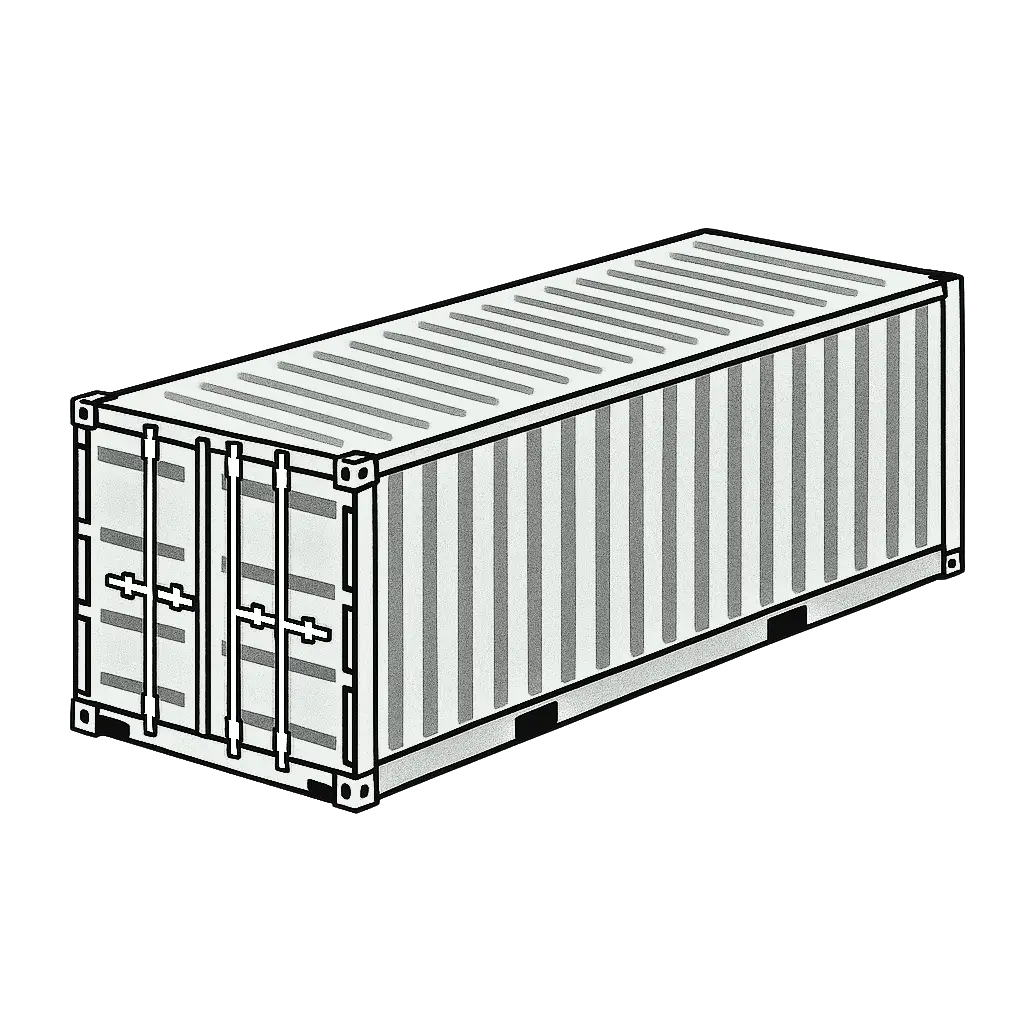
40’ Dry Cargo Container (40DC)

Use: For standard, non-temperature-sensitive goods.

  • Internal size: 12.03 × 2.35 × 2.39 m
  • Volume: 67.7 m³
  • Max load: 28.9 t
  • Tare weight: 3,640 kg

40’ High Cube Container (40HC)

Use: Similar to the 40DC but with increased internal height for taller cargo.

  • Internal size: 12.03 × 2.35 × 2.69 m
  • Volume: 76.5 m³
  • Max load: 28.9 t
  • Tare weight: 3,840 kg

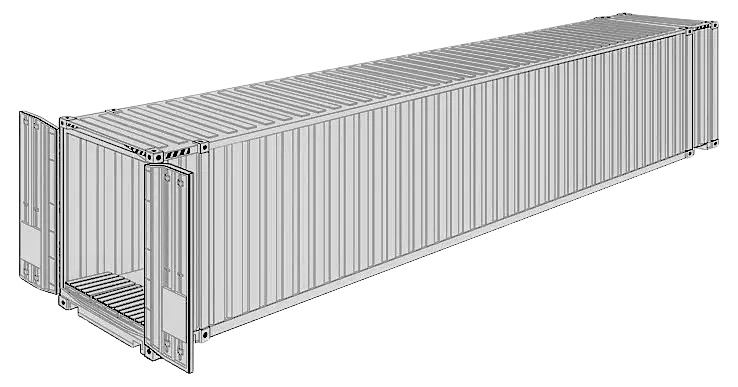
45’ High Cube Pallet Wide (45HCPW)


Use: Designed to fit EUR and FIN pallets side by side.

  • Internal size: 13.55 × 2.42 × 2.69 m
  • Volume: 89.2 m³
  • Max load: 29.7 t
  • Tare weight: 4,320 kg

Hardtop Containers (20HT / 40HT)


Use: For heavy or oversized goods that need crane loading.
These containers come with a removable steel roof, allowing loading from above.

  • 20HT: 5.9 × 2.34 × 2.39 m — 33 m³, up to 21.6 t cargo
  • 40HT: 12.05 × 2.35 × 2.39 m — 66.5 m³, up to 26.5 t cargo

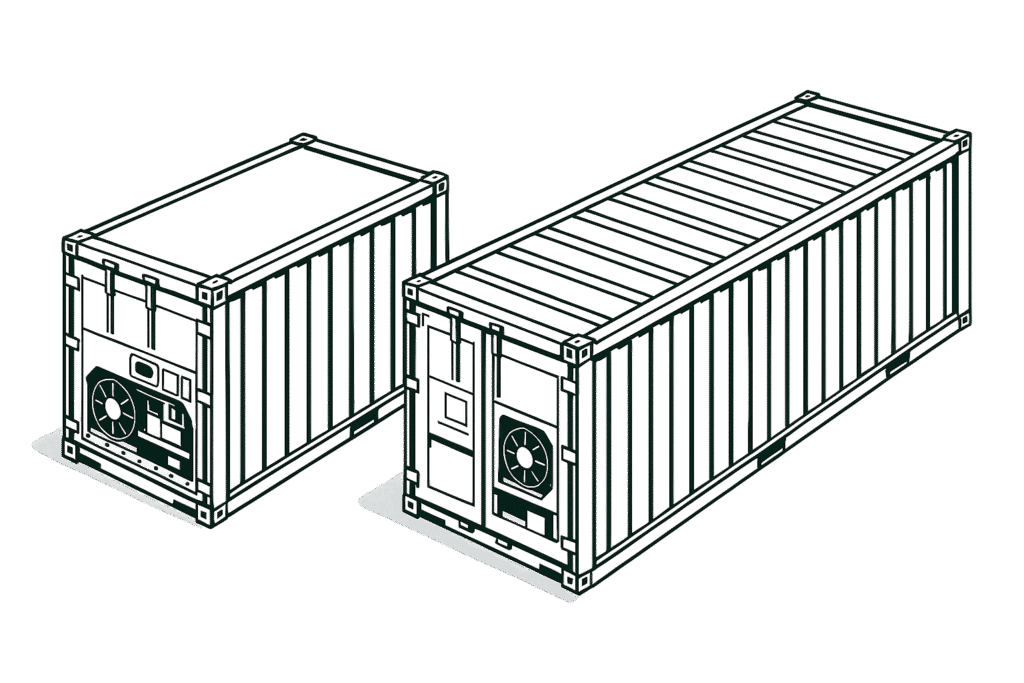
Refrigerated Containers (20’ / 40’ Reefer)


Use: For goods requiring controlled temperatures during transport.

  • 20’ Reefer: 5.4 × 2.29 × 2.16 m — 28.4 m³, 27.6 t cargo
  • 40’ Reefer: 11.59 × 2.29 × 2.50 m — 67.5 m³, 29.4 t cargo

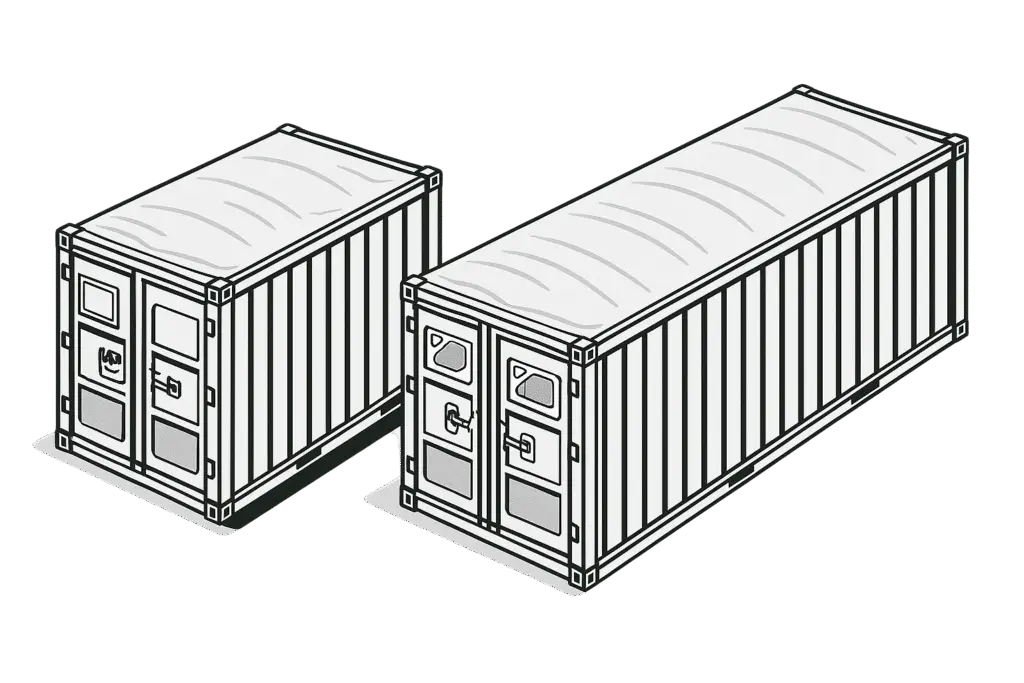
Open Top Containers (20’ / 40’)

Flat Rack Containers (20’ / 40’)

Use: For oversized cargo that exceeds standard dimensions.
They feature collapsible sides or open frames for flexible loading.

  • 20’ Flat Rack: 5.9 × 2.4 × 2.3 m — up to 37 t cargo
  • 40’ Flat Rack: 11.7 × 2.4 × 2.0 m — up to 44.7 t cargo

Flat Rack Containers (20’ / 40’)


Use: For oversized cargo that exceeds standard dimensions.
They feature collapsible sides or open frames for flexible loading.

  • 20’ Flat Rack: 5.9 × 2.4 × 2.3 m — up to 37 t cargo
  • 40’ Flat Rack: 11.7 × 2.4 × 2.0 m — up to 44.7 t cargo

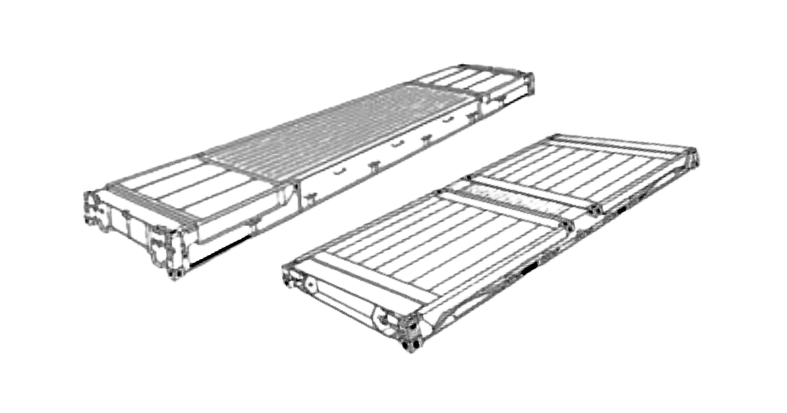
Platform Containers (20’ / 40’)

Use: For heavy or oversized items, without side or roof panels.

  • 20’ Platform: 5.9 × 2.4 × 2.2 m — up to 28 t cargo
  • 40’ Platform: 12.1 × 2.4 × 2.1 m — up to 40 t cargo

containers

Each container type is designed to serve a specific purpose — whether it’s standard dry goods, temperature-sensitive cargo, or oversized loads.
Selecting the right container helps ensure your shipment travels safely, efficiently, and in full compliance with international transport standards.